


The Special Committee on tax evasion started its work this week in Strasbourg, while the European fraud-fighting office OLAF opened an inquiry against the French National Front and its parliamentary assistants. Technical discussions about Greece also started this week, both in Brussels and in Athens, France officially got two more years to reduce its deficit and the 28 member states decided to strengthen controls at EU borders.
The Special Committee of the European Parliament on tax rulings met a second time on Monday, March 9, in Strasbourg. The work of this Committee got off to a slow start. So far, its 45 members only discussed the agenda and priorities.
However, the president of the Committee, Alain Lamassoure, estimated that six months should be enough to tackle the issue at hand. (audio in French)
Click on the button to load the content from Soundcloud.
“We will know how it works in the 28 countries, what are their laws. How do they implement them and how do they negotiate a lower tax rate with multinationals. And then from these informations, we will make some proposals to come back to a transparent and fair taxation. And I hope to a taxation calculated in the same way in all member states,” Lamassoure said.
But according to the Green member of the Committee, Philippe Lamberts, a “six months calendar is too tight.”
The mandate of the Committee expires after six months, but it could, if necessary, be extended.
Financial irregularities in European Parliament
The week of the Parliament in Strasbourg started with the announcement of the Parliament’s President, Martin Schulz, of a possible violation of internal rules by the French party Front National (FN).
The names of 20 parliamentarians’ assistants were found in official organisation chart of the right-wing party.
The salaries of the FN parliamentarians’ assistants are paid with public money of the EU. If it appears that their work is fully or partially not linked to European affairs, this would be a breach of the rules of the Parliament, since EU money cannot be used to finance national parties.
“You cannot be paid by the European Parliament and work for a party group,” said Martin Schulz during a press conference, explaining that parliamentarians’ assistants, either accredited in Brussels or as local assistants, were listed as co-workers in the different departments of the FN.
Schulz decided to send this information to the European fraud-fighting office OLAF and to the French Ministry of Justice.
Asked in Strasbourg, where she was attending the plenary session, about her reaction on the OLAF inquiry, the FN’s leader, Marine Le Pen, explained that this will not change anything on the results of the next French elections. (audio in French)
Click on the button to load the content from Soundcloud.
“Those small political manipulations a few days ahead of the elections are a bit rude, it is the least we can say. And when it comes from the president of the European Parliament, it is particularly unworthy,” said Marine Le Pen. “I have very well understood that nowadays some want to do whatever it takes to damage the Front National. But it will not change the results of the elections – for those who have hoped the contrary.”
Transparency campaigners welcomed the news of the upcoming investigation. More is to be done, said Daniel Freund from Transparency International in an interview with Euranet Plus. According to him, a “comprehensive strategy” for the Parliament to prevent fraud is missing.
Click on the button to load the content from Soundcloud.
“The suspicion is that the Front National might not be the only party in the European Parliament that at least operates in a grey area, let’s say, channelling EU funds into national parties,” Freund said. “That is something that the European Parliament should take seriously, whether it comes to the Front National or other political parties, similar cases should be investigated.”
Troika is finished, talks with technical teams started
Greece stayed on the front page of the European policy this week, starting on Monday with a Eurogroup meeting, where an impatient sounding Eurogroup President, Jeroen Dijsselbloem, noted the loss of time during the last weeks.
The Greek Finance Minister, Yanis Varoufakis, announced that his country is ready to welcome representatives of “the institutions,” if needed, but also underlined that “the idea of the three institutions walking in together and imposing upon us in a kind of power-play policies, as they did in the past: that Troika is finished.”
In an interview with Greek Euranet Plus member Skaï Radio, Varoufakis came back to his announcement from the week-end on a possible referendum to be held in Greece about the reforms to be made. (audio in Greek)
Click on the button to load the content from Soundcloud.
“I would never exclude a referendum, and please don’t make this into another headline tomorrow morning. The referendum is provided in the text of the Greek Constitution. The decision we will reach with our partners will be put at the discretion of the Greek people, in my view, through the Parliament, but it wouldn’t be a bad idea to present it through a referendum,” Varoufakis said. “Our growth programme, that will start after June this year, would succeed even more if it is backed by a majority of the Greek people. All previous programmes have failed.”
French extension to adjust its deficit officially approved
On Tuesday, March 10, the EU Finance Ministers said Yes to the proposal of the Commission to give France two more years to get its deficit under the limit of 3 percent of its GDP.
Some countries expressed their concerns about applying too much flexibility to EU budget rules. “Credibility might be violated,” the German Finance Minister, Wolfgang Schäuble, said.
Small countries expressed their worries that big EU countries get special treatment from the Commission and called for equality.
Enhanced border controls
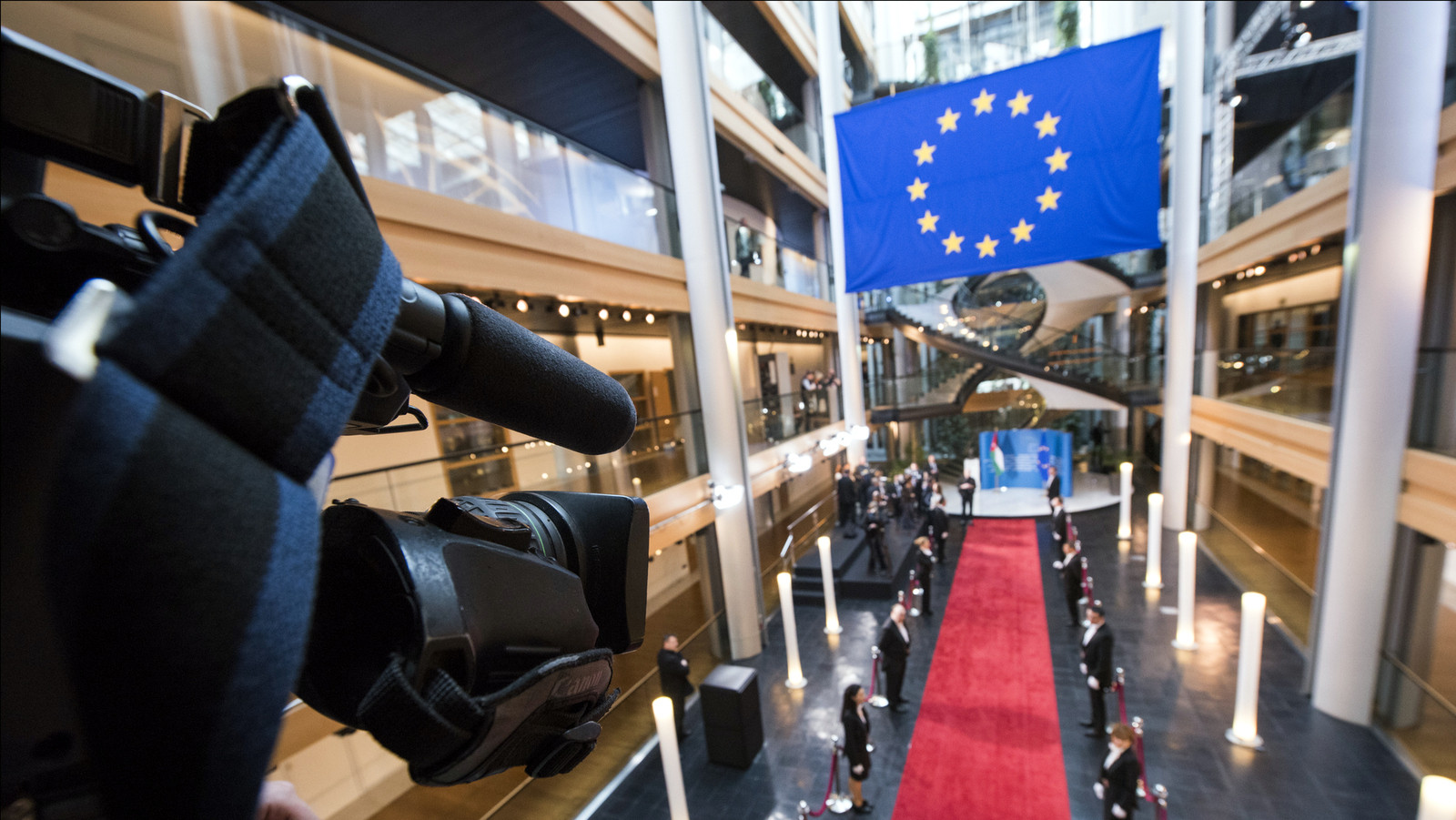
At the end of the week, EU interior ministers discussed European action to fight terrorism and decided to enhance border controls for EU citizens entering and leaving the EU.
“It is envisaged that systematic and coordinated checks will take place on the basis of those indicators already in June,” said Rihards Kozlovskis, Minister of the Interior of Latvia, who is currently leading the discussions in the council.
The topic of sharing information on air passengers (PNR) was also on the agenda of the ministers. Some EU parliamentarians and civil rights organizations are still calling for more data protection.
The French Interior Minister, Bernard Cazeneuve, thinks that it is possible to get an agreement with the Parliament by the end of the year.
Click on the button to load the content from Soundcloud.
“I still think that it is possible to have an agreement by the end of the year. I note there has been progress in the discussions. You have seen that the European Parliament has voted on a resolution on February 11. You have seen that the rapporteur has submitted his report. So, I see positive signs,” said Cazeneuve.
On Friday (March 13), the 28 member states agreed on a draft regulation setting out a general EU framework for data protection. Some key points still need to be discussed, such as the conditions to process personal data.
- Author: Danièle Weber, Euranet Plus News Agency
Suggested Euranet Plus stories
 EU step up border checks to fight terrorists | March 13, 2015 | Euranet Plus News Agency | English
The EU will start controlling passports and do personal checks also for EU citizens when entering and leaving the EU. It’s one of the measures to be put in place in order to fight terrorism within Europe. France is also pushing for “systematic and coordinate” controls. Another tool on the discussion table is the controversial PNR – collection and sharing of private information of air passengers where the EU is moving towards a decision this year.
 Parliament needs ‘comprehensive strategy’ to prevent fraud | March 11, 2015 | Euranet Plus News Agency | English
Transparency campaigners have welcomed the news of the European Anti-Fraud Office’s (OLAF) investigation into possible financial irregularities by France’s National Front party, revealed after the names of assistants to members of the European Parliament were found in official party documents on Monday (March 9). But they say the Parliament must do more to prevent within its own corridors.
 Slow start for special committee on tax rulings | March 11, 2015 | Euranet Plus News Agency | English
The second meeting of the European Parliament’s TAXE special committee on tax rulings took place in Strasbourg on Monday (March 9). So far, its 45 members have only started discussing the agenda and their priorities. With five months left before its mandate expires, the special committee will have to quickly come up with concrete proposals to prevent unfair tax practices in the EU.
 France’s National Front faces OLAF inquiry for financial irregularities | March 10, 2015 | Euranet Plus News Agency | English
European Parliament President Martin Schulz informed the European fraud-fighting office OLAF on Monday (March 9) of possible financial irregularities by France’s National Front party, after the names of assistants to members of the European Parliament were found in official party documents. If confirmed, this would breach internal rules by using EU money to finance the activities of national political parties.
By loading the video, you agree to YouTube's privacy policy.
Learn more
